Wellness
Walking Meditation: How to Turn Your Daily Walk Into Mindfulness
Athens has some of the world's most storied streets for contemplative wandering — here's how to use them.
4 min read
Wellness
Athens has some of the world's most storied streets for contemplative wandering — here's how to use them.
4 min read
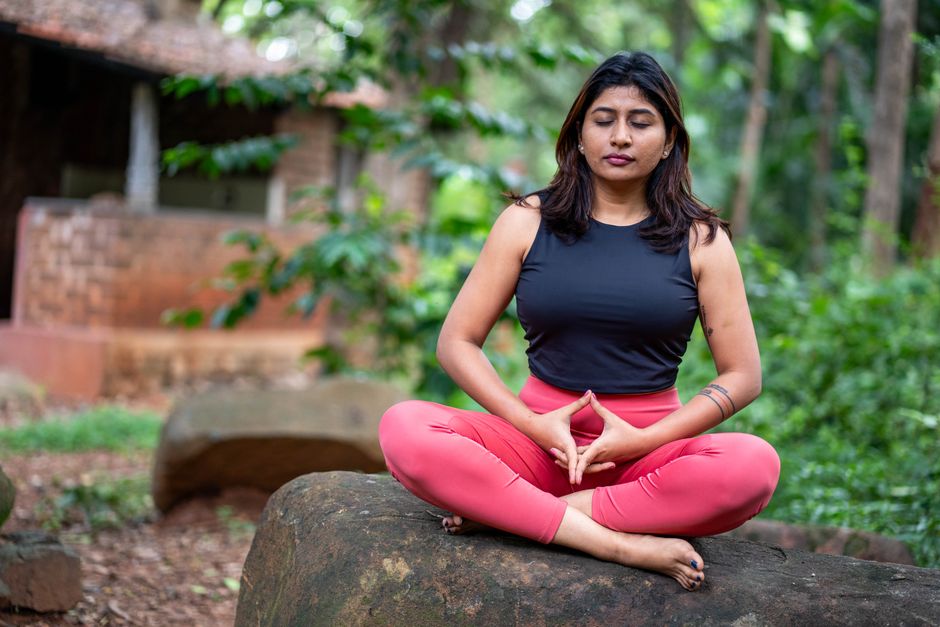
More Athenians are swapping the meditation cushion for the pavement. Walking meditation — the practice of bringing deliberate, moment-by-moment attention to each step — is gaining serious traction in a city where the act of walking has always carried cultural weight, from the peripatetic philosophers of the ancient Agora to the evening volta still observed in Kolonaki and Pangrati today.
The timing makes sense. Stress data collected by the Hellenic Psychiatric Association in late 2025 showed that 61 percent of Greek adults reported moderate to severe anxiety symptoms — up from 54 percent in 2022. At the same time, gym memberships and structured fitness classes have grown steadily more expensive, with a mid-tier monthly membership in central Athens averaging around €55 as of June 2026. Walking costs nothing, and the city's built environment — hills, ancient sites, tree-lined promenades — turns out to be genuinely well suited to the practice.
It is not a stroll. The distinction matters. In standard walking, attention drifts to a phone screen, a to-do list, the argument from the morning commute. In walking meditation, attention anchors to physical sensation: the weight shifting from heel to toe, the texture of cobblestones underfoot on Adrianou Street in Monastiraki, the temperature of air entering the nostrils. The mind wanders — it always does — and the practice is simply to notice that it has wandered and return, without judgment, to the body in motion.
The method has roots in Buddhist kinhin and Theravada walking practices, but secular versions developed through Jon Kabat-Zinn's Mindfulness-Based Stress Reduction (MBSR) program at the University of Massachusetts in 1979 have made it accessible to people with no interest in religious frameworks. MBSR has since been validated by more than 700 peer-reviewed studies, with a 2023 meta-analysis in the journal Psychological Medicine finding statistically significant reductions in anxiety and depressive symptoms across participants who completed the eight-week program — walking practice included.
In Athens, the Filopappou Hill circuit — a roughly 2.5-kilometre loop starting from the Dionysiou Areopagitou pedestrian promenade — is one instructor-recommended route for beginners. The path rises gradually, has minimal traffic noise compared to central Syntagma, and offers enough visual variation — pine trees, limestone outcrops, views toward the Saronic Gulf on a clear morning — to keep an anxious mind from sprinting off into catastrophe. The Zappeion gardens in the National Garden, open daily from 7 a.m., provide a flatter alternative for those dealing with knee problems or simply preferring a more enclosed, quieter setting.
Several organisations in the city now offer structured instruction. The Athens Mindfulness Centre, based in Exarchia, runs an eight-week MBSR course three times a year — the next cohort begins September 8, 2026, with places at €280 for the full program. Each weekly session includes a guided outdoor walking meditation segment, typically conducted in the nearby Strefi Hill park. The centre also publishes a free 20-minute audio guide in Greek, available through its website, designed specifically for the Filopappou route.
The Benaki Museum has partnered since 2025 with a local wellness collective called Noima to offer monthly slow-walk sessions through its Pireos Street annexe and the surrounding Gazi neighbourhood. Those sessions, priced at €12 each, combine mindful walking with brief pauses for sensory observation at specific architectural and historical points — an approach sometimes called heritage mindfulness in occupational therapy literature.
For those who prefer to start alone, the mechanics are straightforward. Choose a route of at least 20 minutes. Leave the earphones at home. Walk slightly slower than your habitual pace. Fix attention on the physical act of lifting, moving and placing each foot. When the mind drifts — to housing costs, to work, to whatever is loudest that day — acknowledge it without self-criticism and return to the feet. Repeat. The Athenian summer heat argues for early morning starts; the Dionysiou Areopagitou promenade is relatively shaded before 8 a.m. and draws a steady crowd of walkers already by 7 a.m. on weekdays.
The practice requires no equipment, no subscription, and no particular fitness level. What it does require is the willingness to treat a walk as something other than dead time. For a city that has spent three millennia thinking on its feet, that should not be a hard sell. As always, consult a local medical professional before making changes to any mental health routine.
About this article
Published by The Daily Athens
Spread the word
Daily brief
Free, in your inbox before 7am. Weekdays.
The Daily Network — local news across Australia